Observe
Relevant traffic, device, network and security context.
 HQ-Lite | Local-first Edge Security
HQ-Lite is ChiRi Studio's purpose-built Linux-based defensive edge appliance. It sits inline between WAN and LAN, combining high-speed network visibility, local device and network context, verified intelligence and Guardian — our bounded Digital Brain for explainable, controlled defensive decisions.
Core operation remains local. The management dashboard stays inside the protected network, and HQ-Lite does not depend on a public SaaS control plane for core defensive operation.
HQ-Lite is an integrated defensive edge system built around a hardened Linux platform. It takes the network-edge position between the internet connection and the local network, where it can observe network activity, maintain local context, operate core network services and support controlled defensive action.
Instead of relying on endpoint agents for core edge visibility, HQ-Lite works from its position in the network. The local dashboard brings network state, security events, device context, system health and defensive decisions into one operator-facing interface.
Normal internet traffic reaches the protected environment through HQ-Lite.
Network services, edge visibility, local context, Guardian decision logic and controlled enforcement are kept together at the network edge.
Clients continue to use the local network while HQ-Lite provides edge visibility and local defensive context.
Guardian is HQ-Lite's purpose-built local decision and response engine. It is not an LLM, chatbot or prompt-driven generative AI assistant. Guardian observes relevant network and security behaviour, combines that observation with local context and verified intelligence, assesses risk, explains why an event matters and coordinates a controlled defensive response when policy and operating mode permit it.
Digital Brain is ChiRi Studio's architectural term for this bounded process — not a claim of unrestricted autonomous AI.
Relevant traffic, device, network and security context.
Understand where the event occurred and what local state is relevant.
Evaluate severity, evidence, policy and confidence.
Record why something was flagged and what evidence supports it.
Observe, allow, review or apply an approved local response with an auditable trail.
The core feature set is closed. Current work is focused on integration, validation and the next intelligence architecture rather than open-ended feature growth.
Maintains IPv4 network context, interfaces, addressing and protected local state so defensive decisions are applied in the correct network environment.
Maintains IPv6 and prefix context so dual-stack operation is understood deliberately rather than treated as unknown external activity. IPv4-only remains a valid operating mode.
High-speed visibility and a controlled enforcement path close to the network interface, before selected traffic travels further through the normal network stack.
Shows DNS, URL and IP security indicators while keeping candidate observations visibly distinct from stronger confirmed intelligence.
Dynamic containment for authorised hostile-source decisions. Approved entries can be synchronised with the XDP/eBPF blocking map and removed again when their TTL expires.
Analyses real-time traffic patterns and produces reviewable findings and recommendations, including scanning and abnormal connection-pressure patterns.
Adds geographic, ASN and TOR context to observations. Context is evidence — not automatic proof of malicious intent.
Monitors the operational integrity of HQ-Lite itself: services, processes, admin access, SSH/SFTP behaviour and protected system areas.
Builds operator-facing device identity and network context, separating trusted devices from observations and helping the administrator understand what is present on the LAN.
Local hardware and system-health visibility: CPU, RAM, storage, temperatures, disk activity and process usage for long-running appliance reliability.
Local network services and policy controls required for an inline edge appliance, including DHCP state, reservations and controlled firewall configuration.
Guardian maintains local Short Memory and Long Memory for the network it protects. Internal intelligence databases are not exposed as general operator databases.
The standalone demo mirrors the current dashboard structure and operator workflows while using synthetic demonstration data. Visitors can explore Guardian activity, XDP Edge, Blackhole, IOC, RTS, Region/TOR, Echo-Probe, Noctilux, Watchdog and network controls without access to a real HQ-Lite deployment.
Demo disclaimer: interactive simulation using synthetic demonstration data. No live customer, household or private network data is displayed. The demo is not connected to a live HQ-Lite node, and actions shown in the interface do not affect a real network.
HQ-Lite is being prepared for a controlled Verified Threat Intelligence Pipeline. The purpose is to stop raw feeds or isolated local observations from becoming automatic enforcement truth.
A security observation can begin as a candidate. The protected Threat Verification Layer is designed to classify the signal, add context, verify current relevance where appropriate and prepare controlled intelligence packages for local use by HQ-Lite.
A security-relevant observation enters the verification path.
Identify what the signal is and separate evidence types.
Check relevance, current state and supporting context where appropriate.
Prepare controlled intelligence for HQ-Lite without turning raw input into automatic truth.
A Threat Candidate Event is a security-relevant network observation that may deserve verification. It is not the same thing as a confirmed threat.
Examples include a URL that appears to imitate a trusted service, a suspicious domain associated with scam/phishing behaviour, an IP or traffic pattern associated with scanning or repeated probing, or a local observation that matches existing intelligence but still needs local context.
HQ-Lite is designed around data minimisation and local operation. Its purpose is to understand network and security context, not to collect the private content of users' online activity.
HQ-Lite has been operated inline on a real multi-device network as an ongoing live validation environment since March 2026. Long-run testing is used to expose issues that short demos miss: service-start behaviour, IPv6 changes, database pressure, thermal limits, false-positive handling, restart/recovery behaviour and interaction between defensive modules.
A 35-day long-run meter record from the current HQ-Lite validation environment.
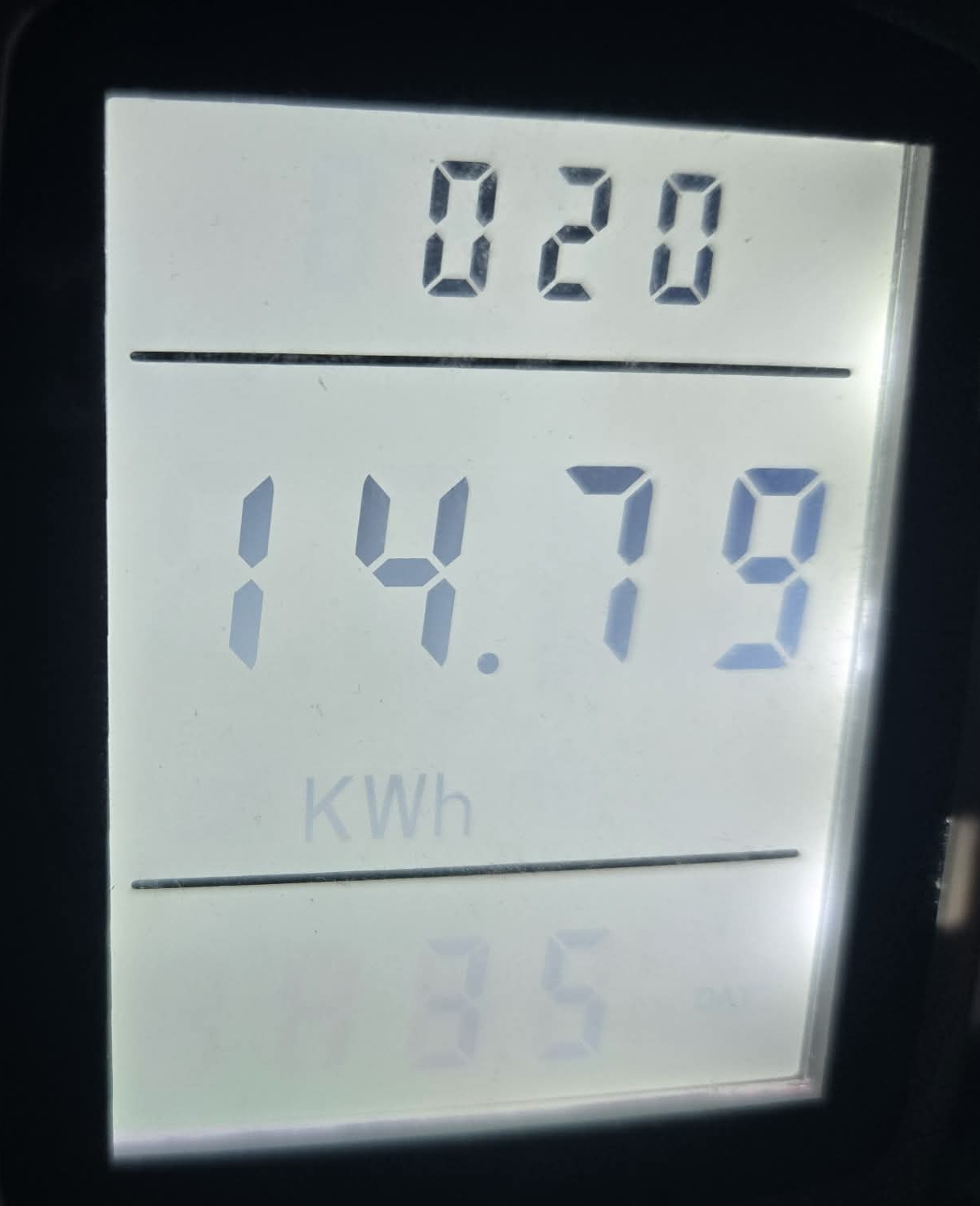
Average calculated from the recorded total energy and measurement duration: 14.79 kWh ÷ 35 days ≈ 17.6 W.
An 81-day long-run meter record from the current HQ-Lite validation environment.
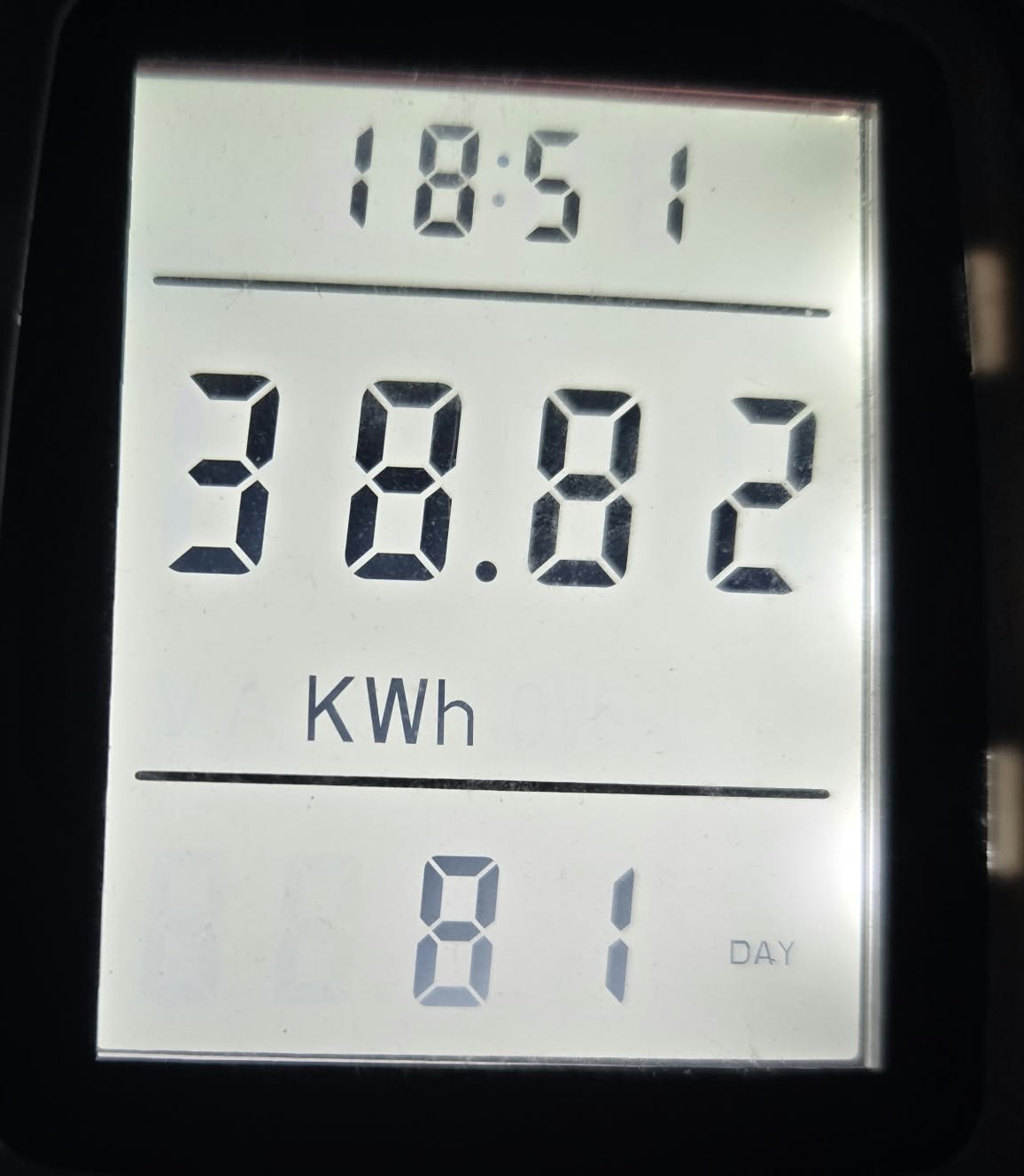
Average calculated from the recorded total energy and measurement duration: 38.82 kWh ÷ 81 days ≈ 20.0 W.
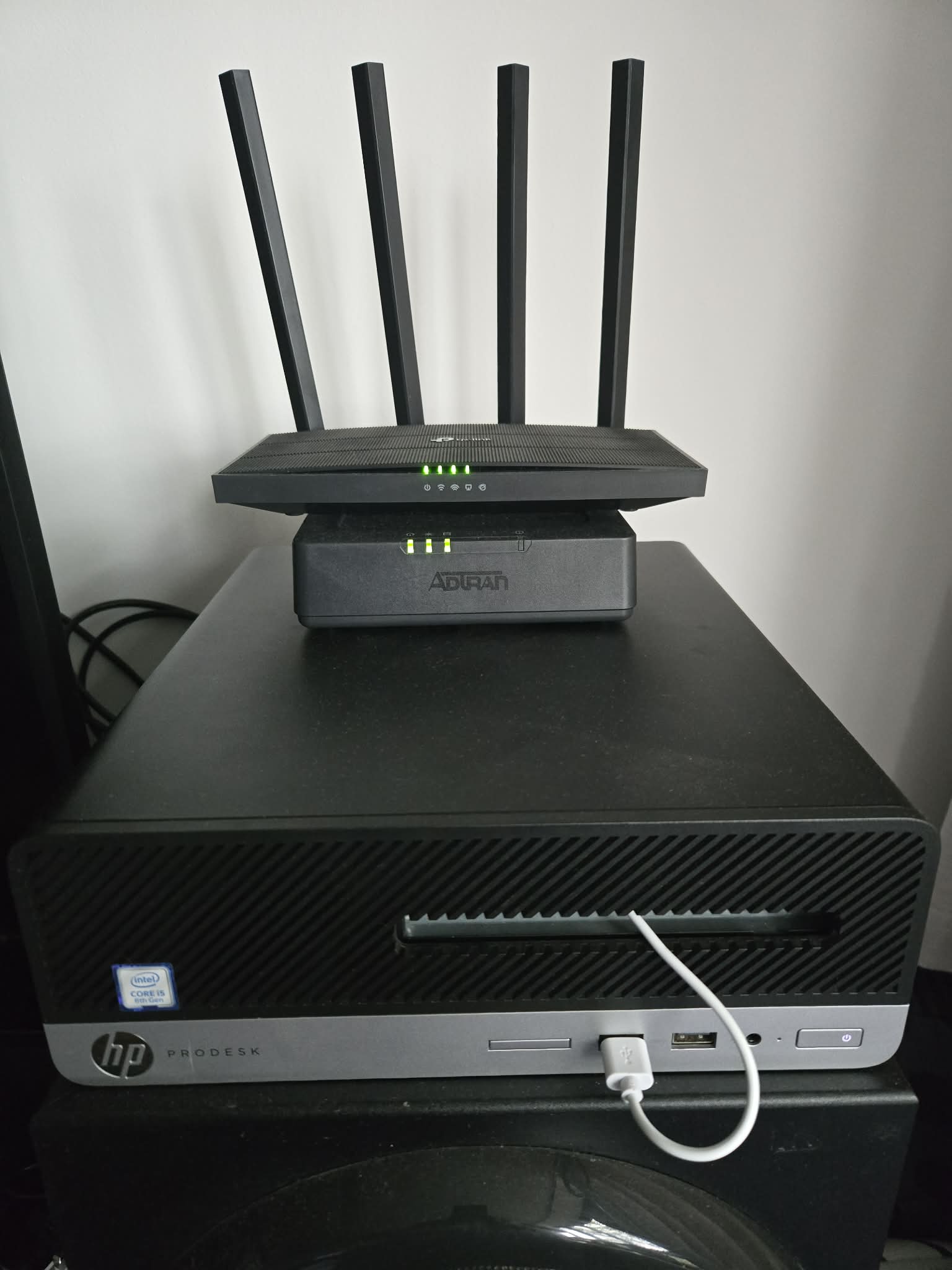
Current field-validation setup. The wireless access point is a separate device and is not part of HQ-Lite itself.
The current HQ-Lite validation node deliberately uses an older small-form-factor x86 platform to test whether the complete edge appliance can remain practical without requiring new or high-end hardware.
This is the current long-run validation platform, not a declaration of final commercial hardware specification. Actual power use can vary with hardware, storage, NIC configuration, workload and network activity.
Four controlled Clonezilla installation tests completed successfully using two separate HDDs on the reference HQ-Lite appliance, supporting repeatable deployment validation across more than one target drive.
Power, stability, system health, network services and defensive behaviour are measured over long periods rather than inferred from short laboratory runs.
The meter photographs document specific long-run test windows; they are not presented as uninterrupted product uptime. Planned interruptions for imaging, controlled backup and mode-transition testing are recorded separately.
HQ-Lite is intended for smaller organisations and edge environments that need stronger local visibility and controlled defensive capability without the footprint of an enterprise SOC platform.
Local defensive visibility without building a full internal SOC.
A repeatable edge-appliance model for managed customer environments.
Guest Wi-Fi, IoT, back-office and uptime-sensitive environments.
Practical low-power local visibility for constrained environments.
Edge decision-making close to remote users and devices.
Traffic pressure, abuse visibility and controlled mitigation paths.
HQ-Lite is a local-first defensive edge appliance that sits inline between WAN and LAN. It combines network services, edge visibility, device context, Guardian and controlled defensive functions in one local system.
No. It includes routing and firewall functions, but the wider system also provides network visibility, device context, defensive event handling, system-health monitoring and Guardian's bounded decision process.
No endpoint agents are required for core edge visibility. HQ-Lite works from its position in the network.
No. Core management is local and the operator dashboard remains LAN-only. Future verification services are designed as controlled supporting services, not as a public SaaS control plane for the customer network.
The core local appliance is designed to remain operational at the edge. External verification should improve intelligence quality, not turn the local network into a cloud-dependent system.
HQ-Lite is not designed to collect or export passwords, login credentials, authentication tokens, session secrets, private message/email contents, banking credentials or payment-card details. Its defensive model is based on network and security context rather than collecting private application content.
TLS interception is not a normal requirement of the HQ-Lite core operating model.
Guardian is HQ-Lite's bounded local decision and response engine. It observes relevant activity, uses local context and verified intelligence, assesses risk, explains decisions and coordinates controlled action when policy permits.
No. Guardian is not an LLM, chatbot or prompt-driven generative AI assistant. ChiRi Studio uses Digital Brain as an architectural term for its bounded observation, context, assessment, decision and response process.
An Indicator of Compromise is a security indicator such as an IP, domain or URL that can contribute to a defensive decision. HQ-Lite distinguishes observations and candidates from stronger verified intelligence.
Blackhole is HQ-Lite’s dynamic containment layer within the firewall path. Approved hostile-source entries are maintained through the local firewall policy and synchronised with the XDP/eBPF edge blocking map, allowing matching traffic to be dropped earlier at the network edge. When an entry expires or is removed, the corresponding edge block is removed as well.
A Threat Candidate Event is a security-relevant observation that may deserve verification. It may be a suspicious URL, domain, DNS observation or scanning source. A candidate is not automatic proof of malicious intent.
Watchdog monitors the integrity and operational state of the appliance. Echo-Probe provides local network identity and device context. Noctilux provides system-health visibility including resources, storage activity, temperatures and process information.
Core management remains local. Planned external communication is purpose-limited: minimal service health/heartbeat information and sanitised security candidates for verification rather than a copy of the customer's full network activity.
No. Region, ASN and TOR information are context. They are not automatic proof of malicious intent and should only influence action through explicit policy and evidence.
No security appliance can guarantee that. HQ-Lite is designed to improve local visibility, context, verified intelligence and controlled defensive response.
ChiRi Studio Ltd is building and validating its own local-first defensive edge technology. The company is focused on product development, operational trust and practical deployment rather than general-purpose IT services.
Security, networking, Linux systems, architecture, Guardian, edge infrastructure and live technical validation.
Product vision, UI/UX, design direction, operations, communication and product clarity.
HQ-Lite remains in technical validation. We are open to conversations with UK technology operators, MSPs and organisations interested in the direction of local-first defensive edge security and future controlled validation.
If a public channel is not linked from chiristudio.com, it should not be treated as an official ChiRi Studio channel.